I Was Sure Someone Else Had Rewritten My Draft. They Didn’t.
If you're a high-achiever who has had lots of success and still find yourself asking, “Why do I doubt myself so much?” you’re not alone. Self-doubt is persuasive. It sounds like the voice of reason.
Most of us never get to fact-check but I did. Here’s what I found…
The Book I Was Sure Someone Else Wrote
Many years ago, I had the opportunity to ghostwrite a book for a highly successful coach.
She’d struggled to find the right ghostwriter and was looking for someone new. I’d listened to her TED Talk and I loved the subject matter, so I jumped at the chance to work closely with someone I admired.
As luck would have it, she liked my writing and decided to move forward with me. (She liked me! She really liked me!)
For months, I interviewed her and the people she’d trained, combed through her notes, and revised her outline. Then I got to work writing.
After a few rounds of notes, she felt ready to send the draft to her editor and that was the end of my part in the process
Several months later, she sent me the final version.
I read the first few chapters and my stomach sank.
The version on my screen was SO much better than ANYTHING I had written. They’d kept my outline, but they’d scrapped most of my writing and I couldn’t really blame them.
Just so I could really torture myself, I pulled up my original draft to compare.
And then, I laughed out loud.
That draft on my screen? The one so good I was convinced someone else had rewritten it? It was almost word for word the book I had written..
Why Do I Doubt Myself When the Proof Is Right There?
That’s imposter syndrome at its finest. The work was good. I was the only one who couldn’t see it. And the only reason I finally could was that I happened to have the receipts.
Now go back and look at how I told that story. “As luck would have it, she liked my writing.”
Luck.
Years later, telling a story about my own imposter syndrome, I still handed the credit to luck. That’s how deep this runs.
We spend so much time convinced we don’t know what we’re doing, that someone else is doing it better, or that we’re only successful because we got lucky. And we believe these stories fully. We let them dictate our actions and stop us from going after what we really want.
The problem is that there’s almost never a book draft to prove us wrong.
So that self-doubt becomes far too easy to trust because we can’t find the evidence to the contrary.
What Self-Doubt Is Quietly Costing You
Most of the high achievers I work with know this voice intimately. On paper, they’re crushing it. Privately, they’re waiting for someone to figure out they don’t belong there.
They’ve told me their self-doubt has kept them from:
Asking for a raise or a promotion
Leaving a job that’s unfulfilling (or downright miserable!)
Starting something brand new at 38 or 47 or 52
Saying no to draining commitments so they can focus on what lights them up
That’s the gap between the career you have and the one you want. Between the life you have and the one you want.
It’s only when they start to challenge those stories that they are able to see what they’re actually capable of. And then, things start to change.
Imposter Thoughts Show Up When You’re Growing
Here’s the part that is the most challenging. Imposter thoughts get loudest when you’re leveling up.
When you’re doing something you already know you’re great at, you don’t doubt yourself. Nobody lies awake wondering if they’re qualified to do the thing they’ve done a thousand times.
When you go after something that’s outside your comfort zone, there’s a natural gap between where you are and where you want to go. That gap is uncomfortable as hell but it’s also where the magic happens.
So if you keep finding yourself wondering, “why do I doubt myself?”, here’s one possible answer: you’re going after something that matters. That doubt is often a sign you’re right on track.
But that doesn’t mean you have to let the doubt be in charge.
Change the Station
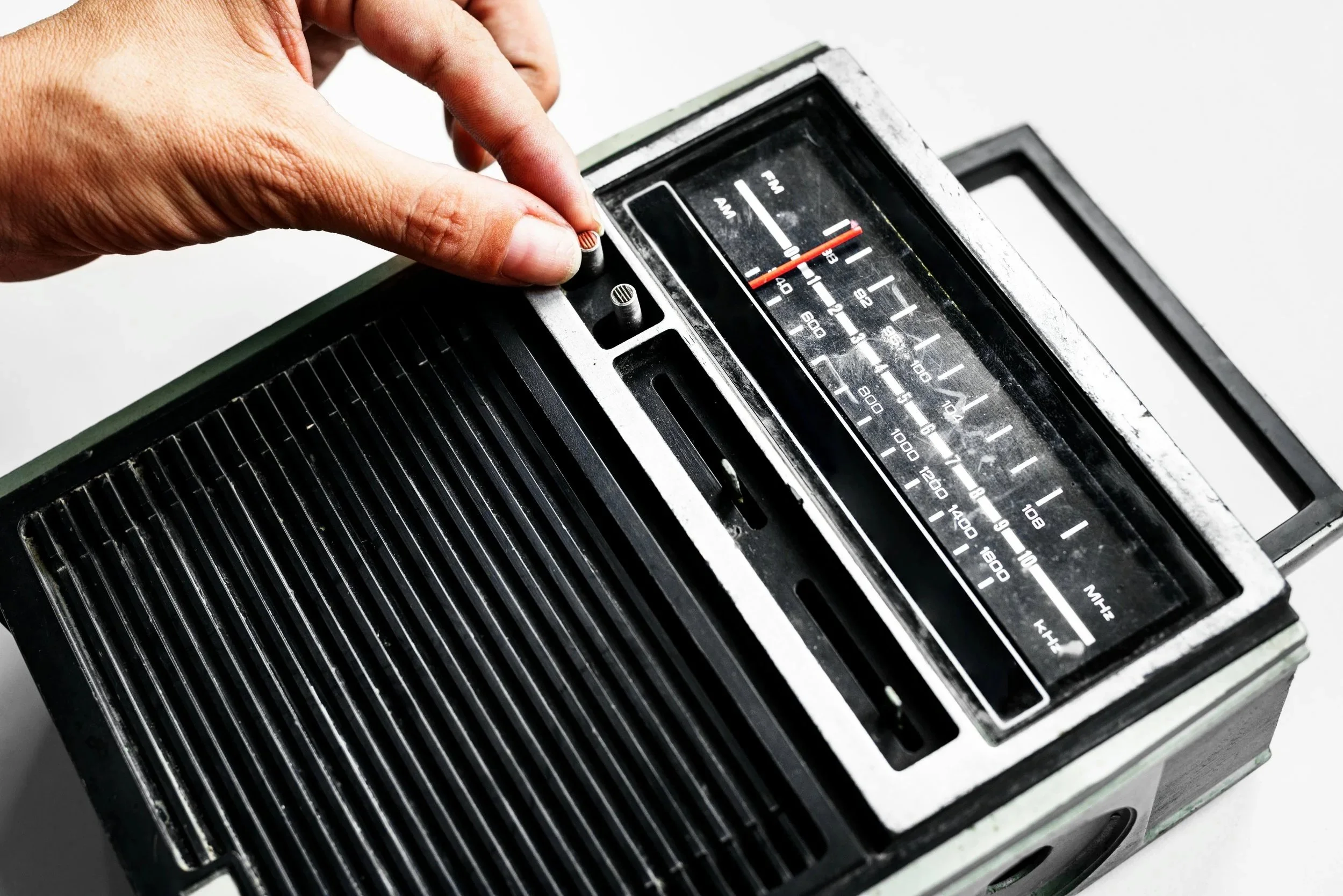
One of my favorite ways to deal with that voice is to think of it as Trash FM. Because you know what you can do with a radio station? Change it.
“You can’t apply to that job. You only have like half the qualifications.” Change the station.
“Who are you to ask for that raise?” Change the station.
“Someone else could do this so much better.” CHANGE. THE STATION.
Then ask yourself how you CAN make it happen. NOT what’s in the way.
You don’t have to bully the doubt into silence. But you also don’t have to hand it the keys. You can hear it, recognize that it’s the voice of fear, and keep moving forward with the plan.
So…
What would you go after if you trusted that your work is as good as other people already think it is?
Where are you calling it luck when it was skill?
What’s the raise, the leap, or the no you keep postponing until you feel ready?
You probably won’t get a book draft to prove that voice wrong. Most of us don’t.
Stop discounting the evidence you already have.
If your inner critic has been running the show, my free Inner Critic guide will help you recognize that voice and start working with it, so it stops making your decisions for you.
Ready to figure out what you’d go after without the second-guessing?